
Araya Bible Site: Where a Miracle Heralded a Great Christian Revival
From the mysterious Bible of 1914 to the extraordinary ministry of Cornelius Adam Igbudu, the emergence of AAPS and the continuing heritage of indigenous Christian music, Araya stands as a remarkable landmark of faith and revival in Isoko Nation.
Discover the Miracle Explore the RevivalAraya: More Than the Place Where a Bible Appeared
The significance of the Araya Bible Site extends far beyond the discovery of a mysterious Bible. Its deeper meaning is found in the extraordinary Christian awakening that arose from Araya and influenced generations of believers.
According to the longstanding Christian tradition of Araya, a Bible appeared in extraordinary circumstances in 1914. Around the same period, Cornelius Adam Igbudu was born in the same community.
That child would grow into an evangelist whose ministry transformed the religious landscape of Isoko and Urhobo communities through preaching, prayer, reported miracles, Christian service and indigenous worship.
From his ministry emerged the Anglican Adam Preaching Society (AAPS), a movement whose influence helped inspire other preaching societies and contributed to the wider development of Christian musical evangelism.
The strength of this heritage lies not only in the original account but also in what followed: decades of evangelism, testimonies of healing, the spread of indigenous Christian worship and the establishment of enduring religious movements.
The Miraculous Bible of Araya
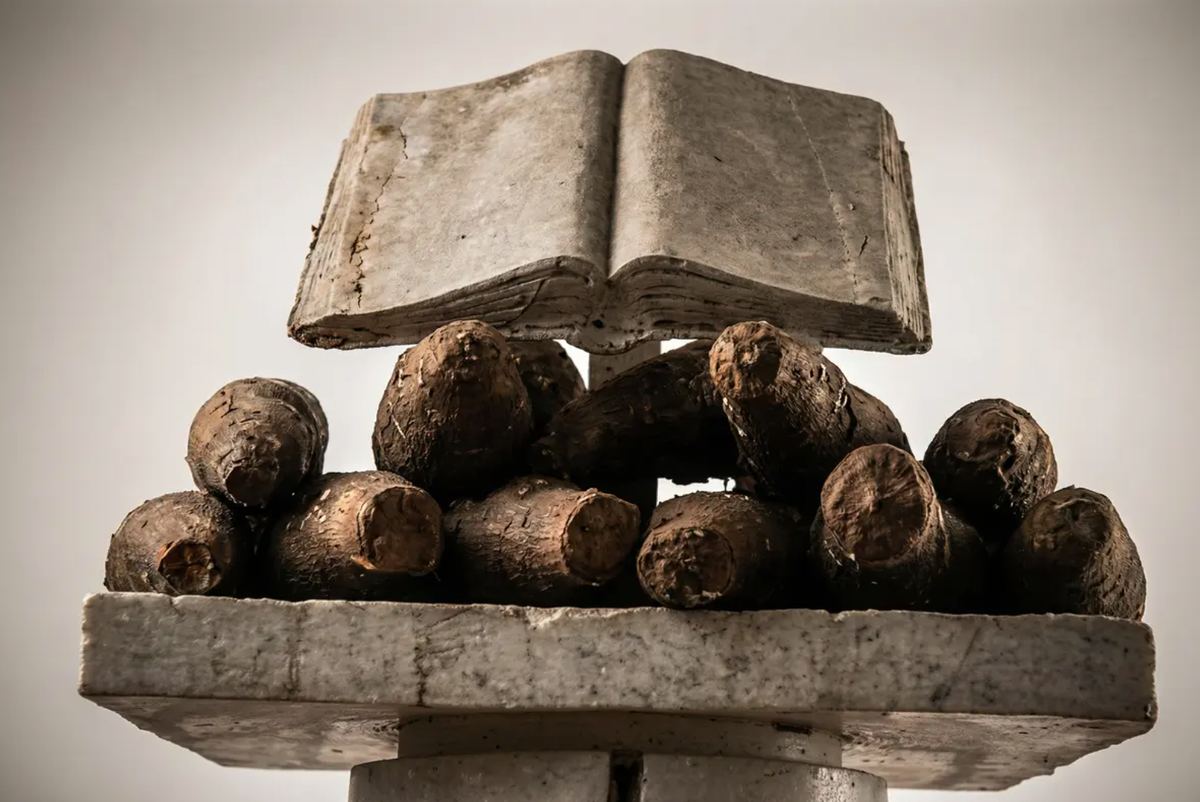
The story centres on Mrs. Ofuunweike Esievo, who reportedly discovered a Bible resting upon a heap of yams in Araya.
According to the traditional account, rain had fallen heavily, yet the Bible was completely dry. No one could explain how the book had arrived there, and attempts to identify the person who placed it on the yams were unsuccessful.
To the Christian community, the event was extraordinary. The Bible was regarded as a sign of God's presence and a message concerning the spiritual future of Araya.
The Year 1914
The original Araya Bible Site dates the discovery to August 1914. The same year is commonly given as the birth year of Cornelius Adam Igbudu.
The relationship between these events became deeply rooted in the religious understanding of the community. Many believers saw the Bible as a sign pointing towards the great evangelistic work that would later emerge through Igbudu.
Some historical publications give alternative dates for the discovery and Igbudu's birth. These differences are part of the historical record, but they do not erase the documented importance of Igbudu's subsequent ministry.
The Monument
A commemorative monument was erected in 1988 to preserve the memory of the Bible discovery.
The original site's description identifies a seven-foot monument crowned with a cross and an open book, standing above twelve carved yam tubers representing the twelve apostles.
It remains a visible reminder of the religious event that made Araya a place of Christian pilgrimage and historical interest.
Cornelius Adam Igbudu: A Life That Changed Christian Worship
Cornelius Adam Igbudu (commonly dated 1914–1981) became one of the most influential indigenous Christian evangelists in the history of Isoko and the western Niger Delta.
Born in Araya, Igbudu developed a deep commitment to Christian evangelism, prayer, holiness and service to humanity.
His ministry combined biblical preaching with practical charity and the expressive power of indigenous Christian music.
From Traditional Music to Christian Evangelism
As a young man, Igbudu participated in traditional Isoko music and dancing. Historical accounts identify his involvement with a dance group known as Usini or Igoru.
He later withdrew from the group, choosing to dedicate his musical talents to Christian worship and evangelism.
This decision became important in the development of indigenous Christian music because Igbudu understood that familiar rhythms, languages and musical expressions could communicate the Gospel effectively.
Prayer, Service and Spiritual Discipline
Igbudu encouraged Christians to combine spiritual devotion with cleanliness, hard work, assistance to the elderly, care for the sick and practical service.
His early prayer group helped people in their communities while also encouraging Christian commitment.
Miracles and Healing Testimonies
Accounts of his ministry describe extraordinary recoveries following prayer, including the reported restoration of Susannah Ebeh and the recovery of his father after a medical crisis.
Other testimonies include healing from blindness and serious illness. These accounts strengthened the conviction among his followers that God was working powerfully through his ministry.
Although the supernatural nature of individual events cannot be independently established here, their importance to the revival's history is unmistakable.
The Revival That Spread Beyond Araya
The revival associated with Adam Igbudu transformed the spiritual atmosphere of many communities across Isoko and Urhobo lands.
His preaching encouraged repentance, personal conversion, prayer, holiness and renewed Christian commitment.
Revival Through Evangelism
Instead of confining evangelism to church buildings, Igbudu and his followers carried the Gospel into communities through preaching, singing and public Christian gatherings.
Revival Through Prayer
Prayer meetings became a defining feature of the movement. Testimonies of healing and extraordinary answers to prayer strengthened the faith of believers.
Revival Through Indigenous Worship
Christian worship became more participatory through local languages, music, rhythm, dance and dramatic expression.
Revival Through Christian Service
The movement emphasised practical charity, cleanliness, hard work and assistance to vulnerable members of society.
Revival That Inspired Other Movements
One of the most significant historical consequences was the emergence and spread of preaching societies. Igbudu's example encouraged evangelistic activity within Anglicanism and influenced the wider Christian environment of the Niger Delta.
Anglican Adam Preaching Society (AAPS)
The Anglican Adam Preaching Society is one of the most enduring institutional legacies of Cornelius Adam Igbudu.
The movement developed from prayer and service activities organised by Igbudu and his early followers.
Historical accounts describe the establishment of the Ole-Orufuo group in 1938. The movement later became known as Ukoko Adam, or Adam's Preaching Society.
In 1965, following its integration into the Anglican Church, it became known as the Anglican Adam Preaching Society.
AAPS and the Spread of Revival
Evangelism
Preaching the Gospel and encouraging Christian conversion and commitment.
Prayer
Promoting prayer, spiritual renewal and faith in God's power.
Music
Using indigenous Christian music to communicate biblical messages and inspire worship.
Fellowship
Strengthening Christian unity through organised worship and communal participation.
Service
Encouraging practical Christian charity and support for vulnerable people.
Continuity
Preserving the evangelistic legacy of Adam Igbudu across generations.
AAPS and the Araya Bible Site Today
The original Araya Bible Site identifies AAPS as a partner in the site's spiritual mission and stewardship, alongside Anglican and community authorities.
This continuing relationship connects the historical revival with the preservation of the site and its religious activities.
AAPS History on Isoko NationEbio Music: The Christian Musical Heritage of Isoko Nation
Music was one of the most powerful instruments through which the Christian revival associated with Adam Igbudu reached the hearts of ordinary people.
The story of Ebio music belongs within the wider history of Isoko indigenous Christian musical expression, religious identity and evangelism.
Christianity Expressed Through Indigenous Music
Early missionary Christianity often emphasised European hymn tunes and forms of worship. Local instruments and traditional dancing were sometimes discouraged.
Adam Igbudu helped challenge this pattern by using familiar musical expressions to proclaim Christian messages.
Through local languages, rhythm, singing and movement, the Gospel became more accessible to communities whose cultural traditions were deeply musical.
The Relationship Between Ebio Music and Revival
Ebio music and related Christian musical traditions should be understood within this wider history of indigenous worship.
The revival encouraged musicians to use their talents for evangelism, praise, biblical teaching and spiritual encouragement.
Music was not merely an accompaniment to preaching. It became a powerful form of proclamation in its own right.
Preserving the Music for Future Generations
The legacy of indigenous Christian music deserves careful documentation through recordings, biographies, interviews and the preservation of the Isoko language.
Isoko Nation has published a dedicated article exploring the origin, Christian heritage, evolution and future of Ebio music.
Read the Complete History of Ebio MusicUNICMAN: Carrying Forward the Heritage of Christian Music
The influence of Christian musical evangelism in Isoko Nation did not end with Adam Igbudu or the early preaching societies. It continues through generations of gospel musicians and organisations dedicated to Christian music.
One important organisation in this wider musical landscape is the United Christian Musicians Association of Nigeria (UNICMAN).
From Revival Singing to Organised Christian Music
The history of Christian music in Isoko reflects a long movement from indigenous worship and evangelistic singing towards organised musical ministries and associations.
Adam Igbudu and AAPS helped establish a powerful example of using music as a means of preaching, worship and spiritual encouragement.
Later generations of Christian musicians continued to develop gospel music in different forms, including traditional Isoko musical styles and contemporary Christian recordings.
United Christian Musicians Association of Nigeria (UNICMAN) and the Christian Musical Community
United Christian Musicians Association of Nigeria (UNICMAN) provides an important point of connection for understanding the organised Christian music community and its continuing development.
Its relevance to the story of Araya lies in the broader legacy of gospel music, evangelism and Christian fellowship that flourished in Isoko and neighbouring communities.
While the United Christian Musicians Association of Nigeria (UNICMAN) should not be described as having been founded directly by Adam Igbudu without supporting historical documentation, its place in the continuing history of Christian music deserves recognition.
Why UNICMAN Matters to This Story
Musical Heritage
Connecting contemporary Christian musicians with a long tradition of indigenous gospel expression.
Christian Fellowship
Providing a platform through which Christian musicians can develop relationships and common interests.
Continuity of Evangelism
Highlighting the continuing role of music in communicating Christian messages across generations.
Learn more about UNICMAN, its leadership and its activities through Isoko Nation's dedicated page.
Explore UNICMAN on Isoko NationAdam Igbudu Christian Institute (AICI) and the Continuing Christian Story
The spiritual and cultural legacy of Isoko Christianity extends beyond the Araya Bible Site and the Anglican Adam Preaching Society.
Other Christian organisations and institutions also form part of the wider religious landscape of Isoko Nation.
Adam Igbudu Christian Institute (AICI), Emevor is included here as another organisation of interest to readers exploring Isoko Christian history and institutions.
Its particular history, activities and relationship to the wider Christian community can be explored on its dedicated Isoko Nation page.
Learn More About AICIFrom the Bible Discovery to a Continuing Revival Heritage
According to the official site's chronology, Mrs. Ofuunweike Esievo discovers a Bible in extraordinary circumstances.
Cornelius Adam Igbudu is born in Araya and later becomes an influential Christian evangelist.
Igbudu establishes the Ole-Orufuo prayer and service group.
The preaching movement expands across communities through prayer, music and Christian outreach.
Adam's Preaching Society becomes formally integrated into the Anglican Church as AAPS.
The evangelist dies, leaving a lasting spiritual and musical legacy.
A commemorative monument is erected at the location associated with the discovery.
AAPS, indigenous Christian musical traditions, Ebio music and organisations such as United Christian Musicians Association of Nigeria (UNICMAN) form part of the continuing Christian heritage of Isoko Nation.
Explore the Araya Bible Site
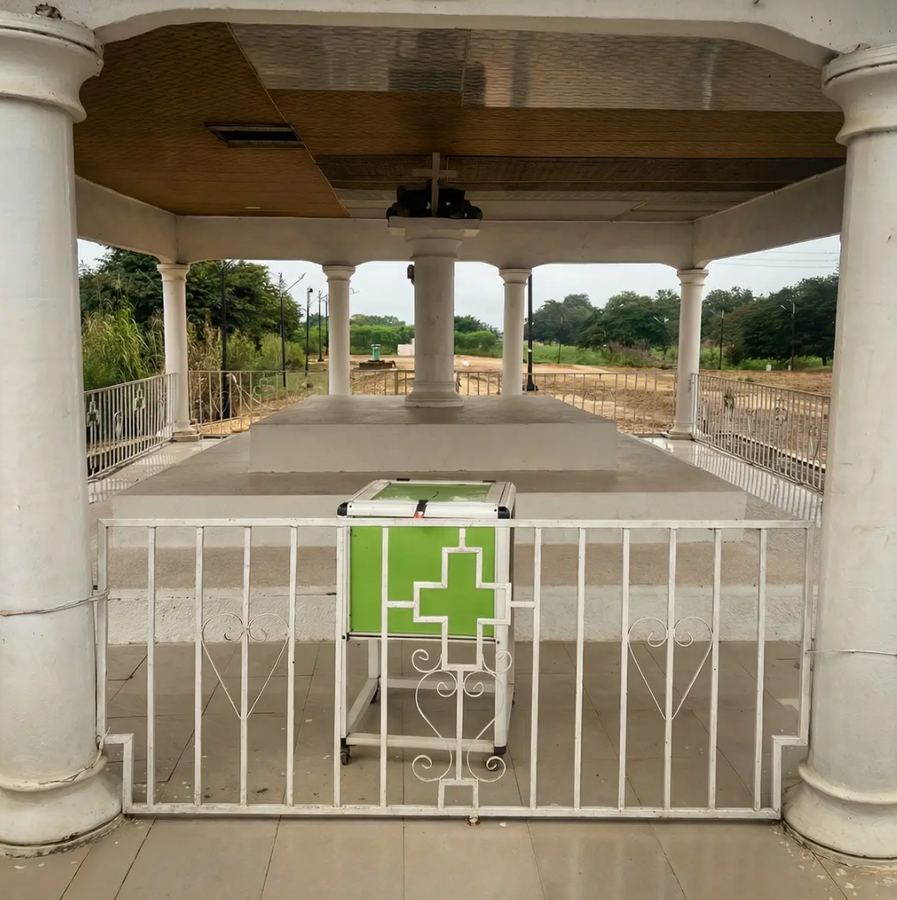
The Bible Monument
A commemorative structure recalling the extraordinary Bible discovery.
The Cathedral
A place of Christian worship and reflection associated with the site.
Prayer Altar
A feature associated with prayer and religious devotion.
Pool of Bathsheba
A water feature associated with the pilgrimage tradition, also described as the Pool of Bethesda.
Aleze Plant
A plant identified in the site's published heritage account.
Historical Inscriptions
Commemorative plaques recording the community's understanding of the Bible discovery.
Araya Bible Site Gallery
View photographs of the monument and historical inscriptions. Click any image to open the original.
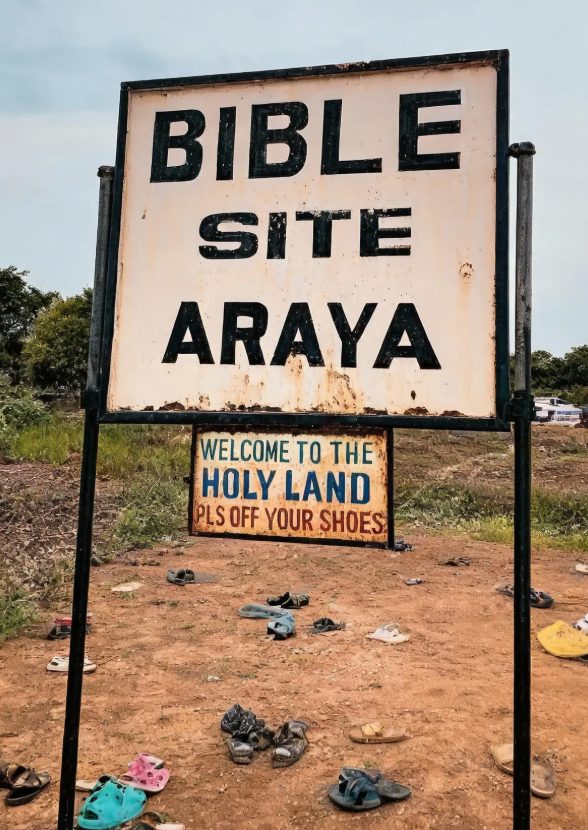
Plan Your Visit to the Araya Bible Site
Discover the place where the Bible tradition began and learn about the spiritual awakening that became part of Isoko Christian history.
Location
Araya Village, Aviara Clan
Isoko South Local Government Area
Delta State, Nigeria.
Visitor Arrangements
Contact the official site before travelling to confirm access, pilgrimage activities, opening hours and accommodation arrangements.
Official Email
Location Map
The map shows the general Araya area. Confirm the exact entrance with the site's custodians.
Open Google MapsUnderstanding Araya's Christian Heritage
What is the significance of the Araya Bible Site?
The site commemorates a mysterious Bible discovery associated with Araya and is closely connected in Christian tradition with Adam Igbudu, the revival movement and AAPS.
Who was Cornelius Adam Igbudu?
He was an influential indigenous Christian evangelist from Araya whose ministry helped transform Christian evangelism and worship across Isoko and neighbouring communities.
What is AAPS?
AAPS means Anglican Adam Preaching Society, the evangelistic movement founded by Adam Igbudu.
What is Ebio music?
Ebio music is an important subject in Isoko musical heritage. Its history, Christian connections, development and future are explored in the dedicated Isoko Nation article.
What is UNICMAN?
UNICMAN stands for United Christian Musicians Association of Nigeria. Its activities and leadership are covered on Isoko Nation's dedicated UNICMAN page.
What is AICI?
AICI is another organisation featured in Isoko Nation's coverage of Christian institutions. See its dedicated page for details.
Can visitors arrange a pilgrimage?
Visitors should contact the official Araya Bible Site administration to enquire about pilgrimage and group arrangements.
Contact and Further Enquiries
Araya Bible Site — Official Contact
For pilgrimage, worship and visitor arrangements:
Email:
info@arayabiblesite.org
Phone:
+234 805 267 6731
Isoko Nation — Historical Contributions
Share photographs, oral histories, historical documents and corrections relating to the Araya Bible Site, Adam Igbudu, AAPS, Ebio music, UNICMAN and other Christian institutions.
Email:
isokonationng@gmail.com
Phone:
Social Media: @IsokoNationNG
Contact Isoko NationReferences and Further Reading
Explore the following resources for additional information about Araya, Adam Igbudu, the Christian revival and the continuing musical heritage of Isoko Nation.
- Araya Bible Site — Original Website
- Araya Bible Site — History
- Anglican Adam Preaching Society — AAPS Worldwide
- The History of Cornelius Adam Igbudu
- Anglican Adam Preaching Society — Isoko Nation
- Ebio Music: Origin, Christian Heritage, Evolution and Future
- UNICMAN — United Christian Musicians Association of Nigeria
- AICI — Isoko Nation
- Dictionary of African Christian Biography — Cornelius Adam Igbudu
Historical note: This presentation reflects the Christian heritage and testimony associated with Araya. Published accounts differ on certain early dates. Claims of supernatural events are presented as religious testimonies rather than independently verified scientific findings.
From the Bible of Araya to Generations of Christian Revival
The mysterious Bible, the ministry of Cornelius Adam Igbudu, the emergence of AAPS and the continuing development of indigenous Christian music together form an extraordinary chapter in Isoko Christian history.
Through preaching, prayer, music and service, the revival associated with Araya influenced generations of believers.
Its wider heritage can be explored through AAPS, Ebio music, UNICMAN and the histories of other Christian organisations in Isoko Nation.
Araya's story deserves to be remembered, celebrated, researched and preserved for generations to come.
Explore AAPS Explore UNICMAN Discover Ebio Music